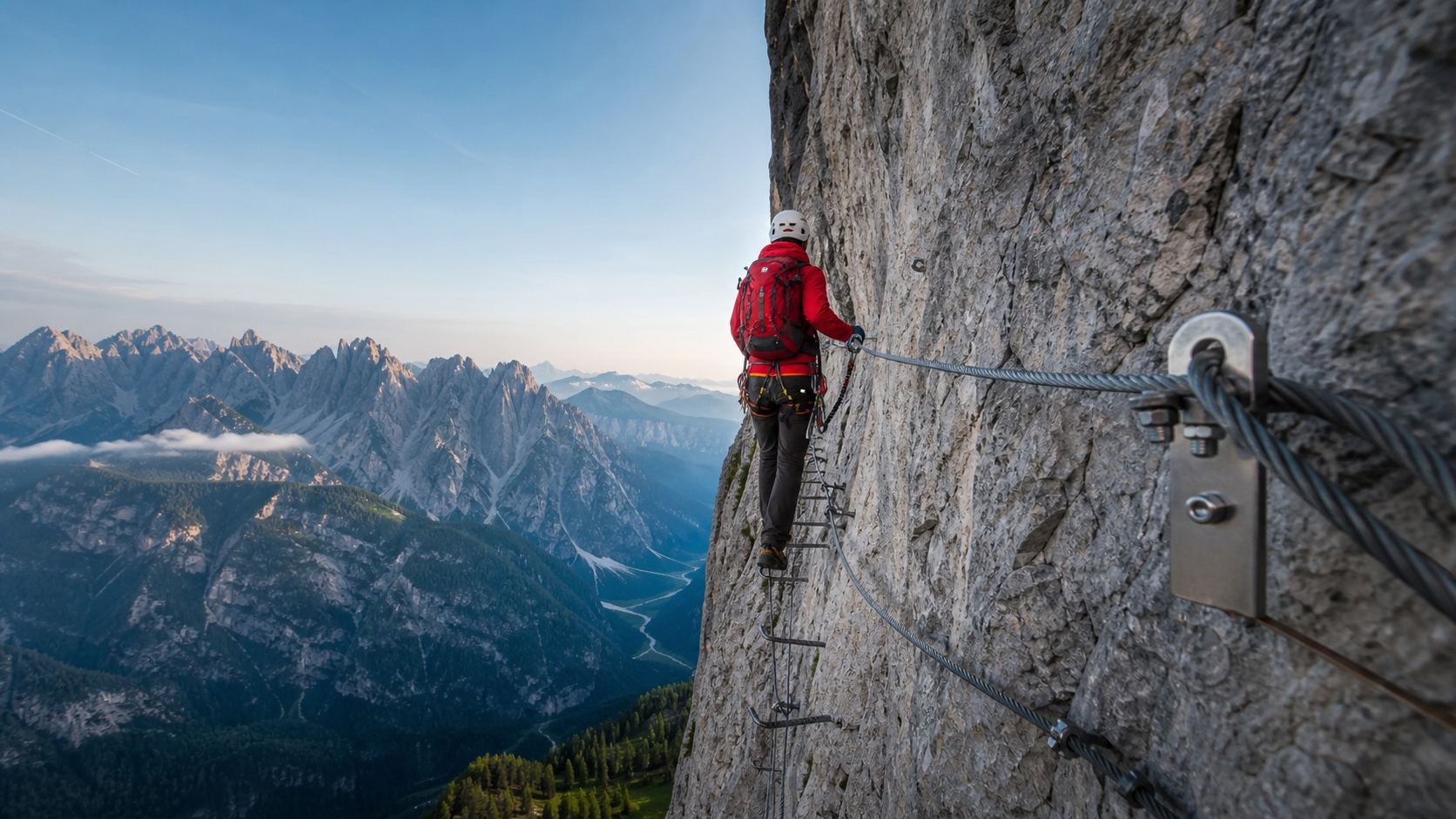
We connect cities, landowners, and organizations with Europe's most experienced via ferrata installers, managing every step from concept to long term maintenance.
A via ferrata is a mountain pathway fitted with permanent metal cables, rungs, ladders, and sometimes suspension bridges, all bolted straight into the cliff or ridge. The term comes from Italian and translates to "iron way." Climbers wear a harness connected to the fixed cable through a forked lanyard with two carabiners, which lets them detach one arm at a time while moving, so they always remain clipped in.
The idea dates back to the First World War, when military engineers built iron paths through the Dolomites to move soldiers and supplies across otherwise impassable rock. Decades later, mountain communities repurposed many of those same paths for recreation, sparking the modern via ferrata movement.
There are now well over 1,000 documented routes across the globe, with the heaviest concentration found in the Alps, spanning Austria, Switzerland, Italy, and Germany. France alone maintains more than 150 official routes, and installations are steadily expanding into North America, Latin America, Asia, and other mountainous regions.
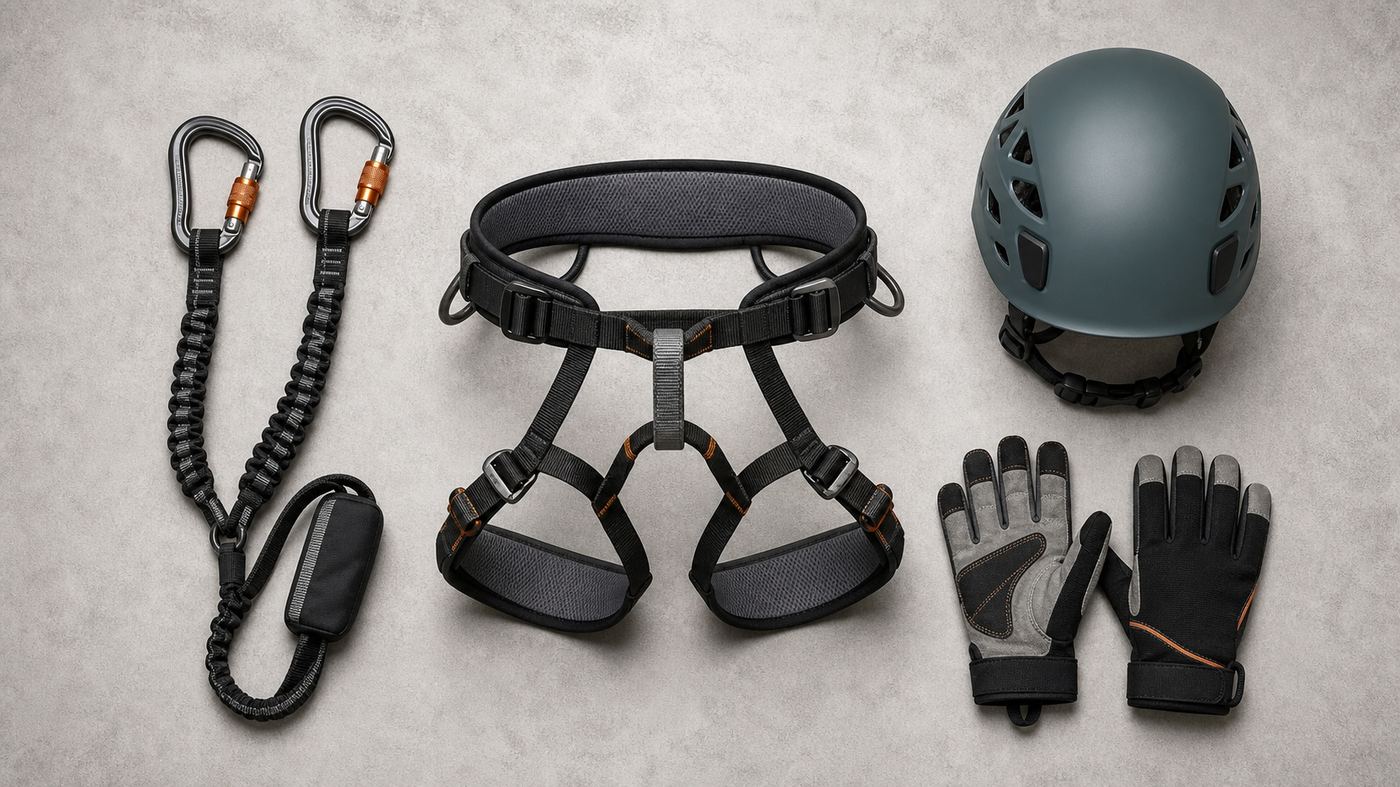
For nearly every route, three items form the non negotiable core kit: a climbing helmet, a proper harness, and a lanyard set, also called a Via Ferrata Set, built with an energy absorbing brake. Grippy gloves and shoes with a stiff sole round out the setup. One detail that surprises newcomers is that the lower grades demand no prior climbing background at all. Reasonable fitness and comfort with heights are enough to complete an easy route safely.
Route difficulty is measured through a handful of regional scales that all describe similar terrain characteristics using different labels. The Italian scale, later endorsed by the UIAA as an international reference point in 2016, ranks routes from F (easy) to ED (extremely difficult). Austria uses a letter scale from A to F.
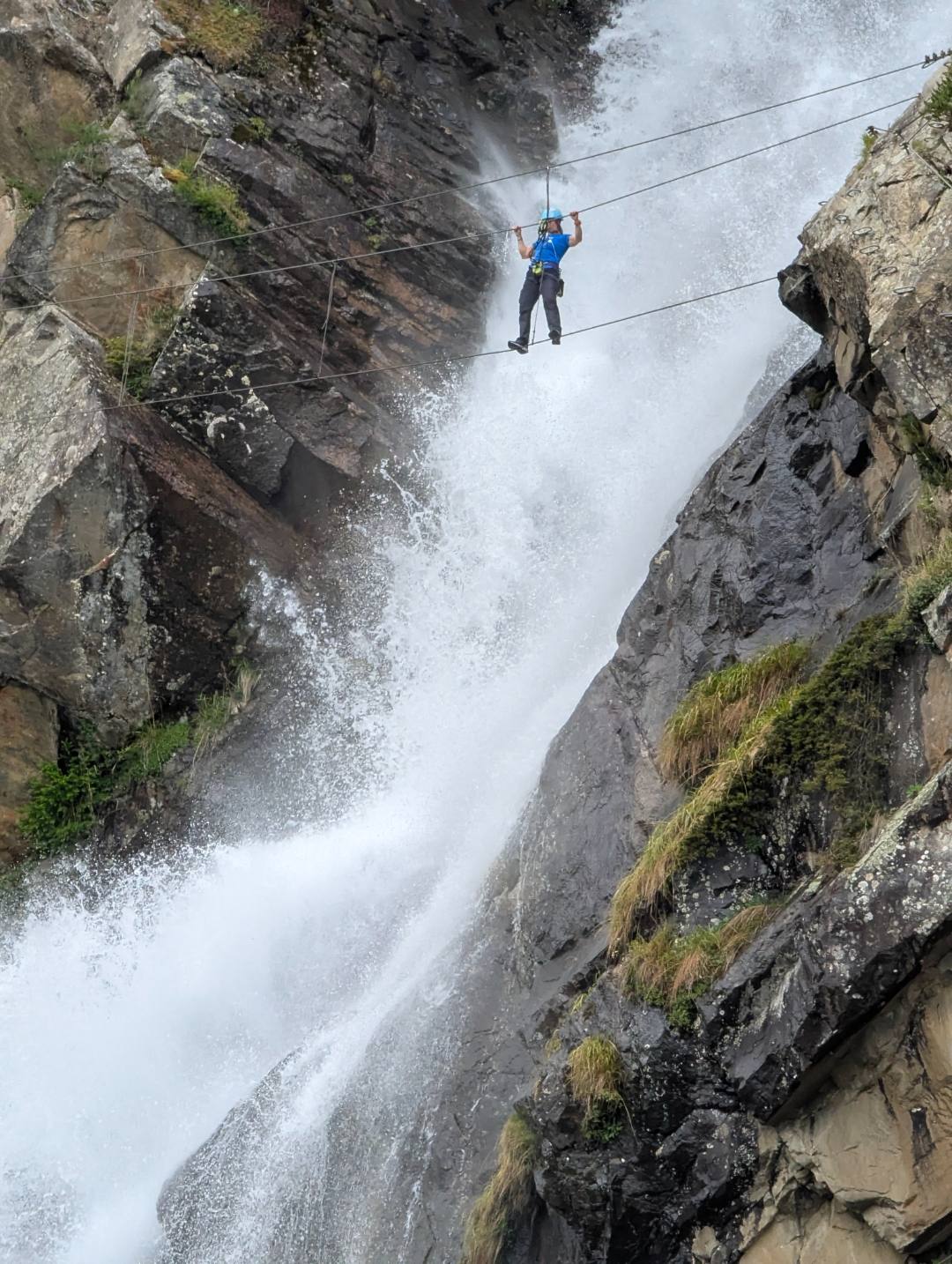
Interest in via ferrata has climbed sharply since the early 2000s, largely because it fills the gap between a standard hike and a technical rock climb. Visitors get the thrill and the views of alpine climbing without the years of training a rope climb normally demands.
That accessibility is the real engine behind its tourism appeal. Because the fixed cable system does most of the safety work, people with average fitness, including many children, can reach dramatic cliff edges and summit views that used to belong only to trained climbers. A destination does not need to market a niche extreme sport anymore. It can market a shared family adventure with real adrenaline built in.
The economic case is just as compelling for cities and landowners. A single well built route can become a standalone destination. The Vigneaux via ferrata in France, for example, pulls in around 15,000 visitors annually on its own, proof that one quality installation can shift a region's visitor numbers meaningfully. Compared with building a cable car, ski lift, or theme park attraction, a via ferrata requires a relatively modest capital outlay while still delivering a headline grabbing, photo friendly experience that spreads across social media on its own.
Beyond the numbers, a via ferrata tends to extend how long visitors stay in an area and how much they spend on lodging, food, and gear rental nearby. It also gives a destination a distinct identity, something sharper than "just another hiking trail," which matters in a tourism market where regions increasingly compete on unique experiences rather than scenery alone.
Routes worldwide
Official routes in France alone
Annual visitors at a single French route
Continents with active installations
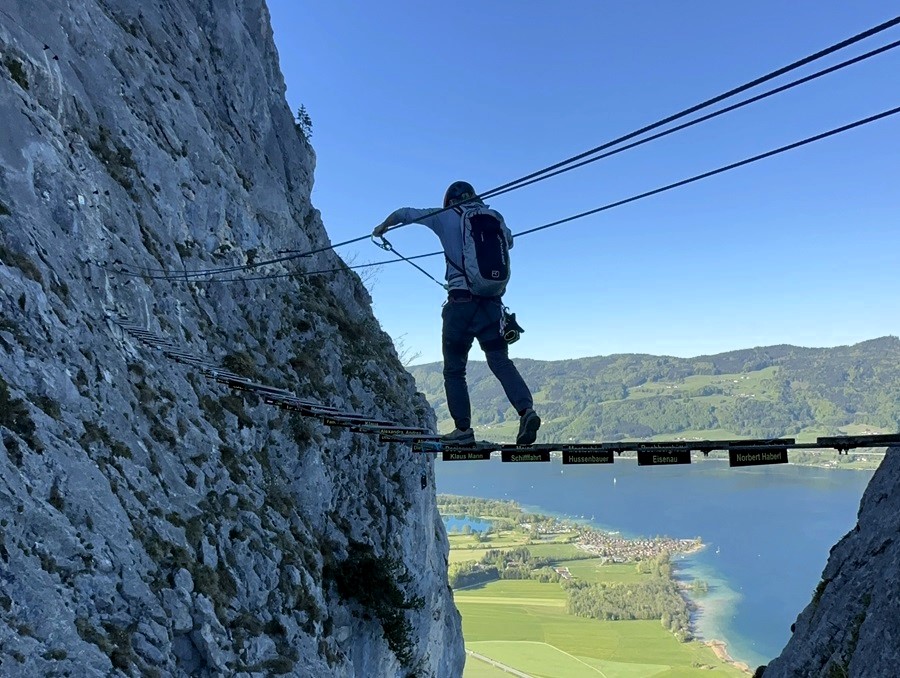
A suspended bridge crossing mid-route, one of the signature moments a well designed via ferrata can offer.
We sit between organizations that want a via ferrata and the specialized contractors who build and maintain them, managing the relationship from the first idea through years of operation. Our specialized contractors are based in Europe and have installed numerous via ferratas in the Alps, so their expertise is exceptionally strong. We operate fully in English and Spanish.
We assess rock quality, slope angle, access trails, and views, then match those findings against the difficulty grade that fits the client's intended audience, whether that is families seeking an easy A grade route or thrill seekers wanting an F challenge.
The installer places anchors rated to recognized safety standards, runs the steel cable line, and fixes rungs, ladders, or bridge sections. Optional add ons like a zip line finish or a suspended walkway can be built in depending on budget and terrain.
Every anchor and cable segment gets load tested before the route opens, and the results are documented so the client has a clear safety record from day one.
Cables stretch, anchors corrode, and rungs wear down over years of use, so we coordinate scheduled inspections, cable retensioning, and part replacement to keep the route within safety limits for the long haul.
We help plan signage, difficulty labeling that matches international grading conventions, and connections to local gear rental shops or guiding companies, so first time visitors have everything they need before they clip in.
Acting as the single point of contact means a city or landowner never has to translate their vision directly to an installer's technical language. We do that translation, then monitor quality and safety for as long as the route stays open.
A via ferrata is a mountain route with fixed steel cables and metal rungs that let hikers climb safely using a harness and clip in system, without needing rope climbing skills.
No. Easy graded routes (F or A grade) are designed for beginners with basic fitness and no climbing background.
A helmet, a harness, and a certified lanyard set (via ferrata set) with a shock absorber are the three essentials. Gloves and sturdy shoes are also recommended.
Over 1,000 routes exist globally, concentrated mainly in the Alps across Austria, Italy, Switzerland, Germany, and France.
Via ferrata uses fixed cables and hardware built into the rock for continuous safety, while rock climbing relies on ropes, removable protection, and technical skill.
Most routes use the Italian scale (F to ED), the Austrian scale (A to F), or the German Hüsler scale (K1 to K6), all measuring exposure and physical demand.
Absolutely, on easy graded routes. Most operators recommend a minimum age around 10, depending on the child's height and comfort with heights.
A via ferrata offers a high impact, photogenic adventure attraction with a lower construction cost than lifts or theme parks, and it extends visitor stays and local spending.
Specialized installers handle engineering, anchor placement, and cable installation, followed by scheduled inspections and maintenance to keep the route safe over time.
Completion time varies by route length and difficulty, ranging from under an hour on short, easy courses to several hours on longer, advanced routes.
Most builds take three to six months once installation starts, depending on route length and site access. Remote or high altitude locations often need extra time for material transport.
The site needs solid, stable rock, varied terrain like ledges and vertical walls, good drainage to limit corrosion, and reasonable access. A scenic payoff, such as a summit or valley view, helps too.
Latin America has only a handful of routes, mostly in Chile, Argentina, and Brazil. Asia has more activity, especially in China and Southeast Asia, but still far fewer routes than Europe. Rising outdoor tourism demand makes now a strong time to secure a first mover advantage worldwide.
Tell us about your site and we will connect you with the right installer, plan, and timeline.
Contact Us